The promotion mix components consists of the following key tools:
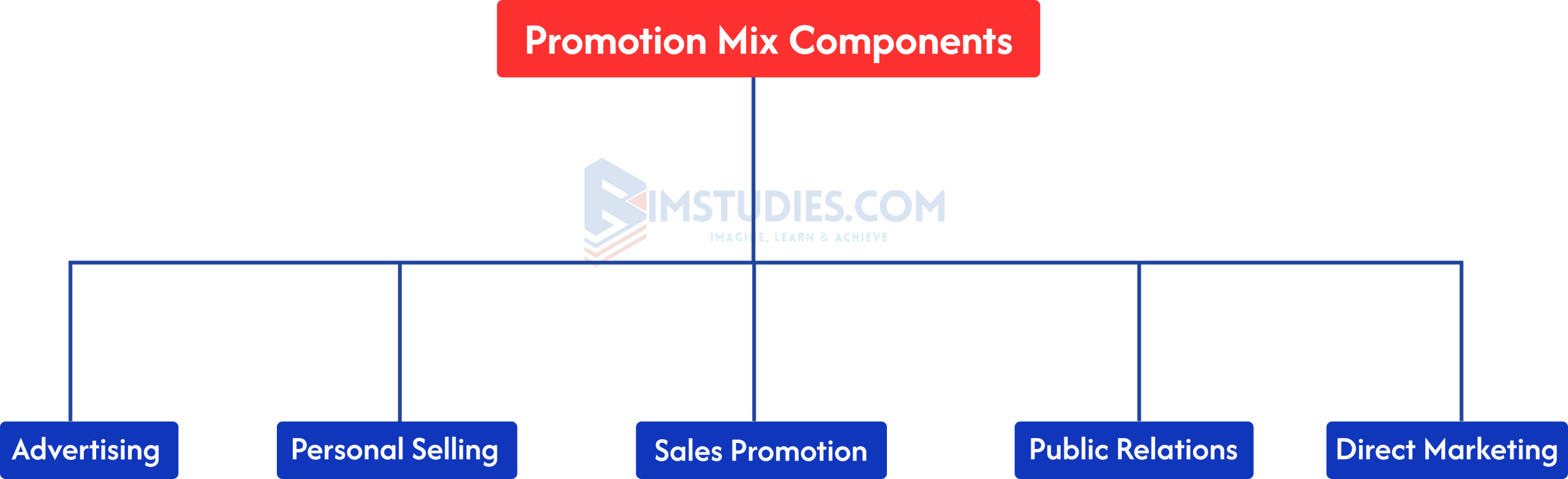
1.) Advertising:
Advertising is a non-personal form of paid communication used to promote products, services, ideas, or brands to a large and diverse audience.
- It is usually delivered through mass media such as television, radio, newspapers, internet, billboards, etc.
2.) Personal Selling:
Personal selling is a form of direct, face-to-face communication between a salesperson and a potential customer.
- It involves two-way interaction, which allows for personalized messages, immediate feedback, and the building of long-term relationships.
3.) Sales Promotion:
Sales promotion refers to a variety of short-term marketing activities designed to encourage immediate customer response, such as making a purchase, trying a product, or increasing brand engagement.
- It is usually temporary and intended to boost sales quickly, complementing advertising and personal selling efforts.
4.) Public Relations (PR):
Public Relations (PR) refers to the set of activities a company undertakes to build, maintain, and manage a positive image and reputation with its various stakeholders—such as customers, employees, investors, government, media, and the general public.
- PR is non-paid, non-personal communication that focuses on public perception and aims to build goodwill and manage crises or rumors effectively.
5.) Direct Marketing:
Direct Marketing refers to a form of marketing communication where businesses directly reach out to individual consumers to promote products or services, aiming to generate an immediate and measurable response or action—such as a purchase, inquiry, or visit.
- It bypasses intermediaries like retailers and directly connects the seller with the buyer through various channels.
- It is targeted, personalized, and often interactive, making it effective for building relationships and tracking performance.
Factors Affecting Determination of Promotion Mix:
Several factors influence how a company designs its promotion mix:
- Nature of the product (consumer vs. industrial goods)
- Stage of product life cycle (introduction, growth, maturity, decline)
- Target market characteristics
- Budget availability
- Competitor strategies
- Marketing objectives
Discussion 0